

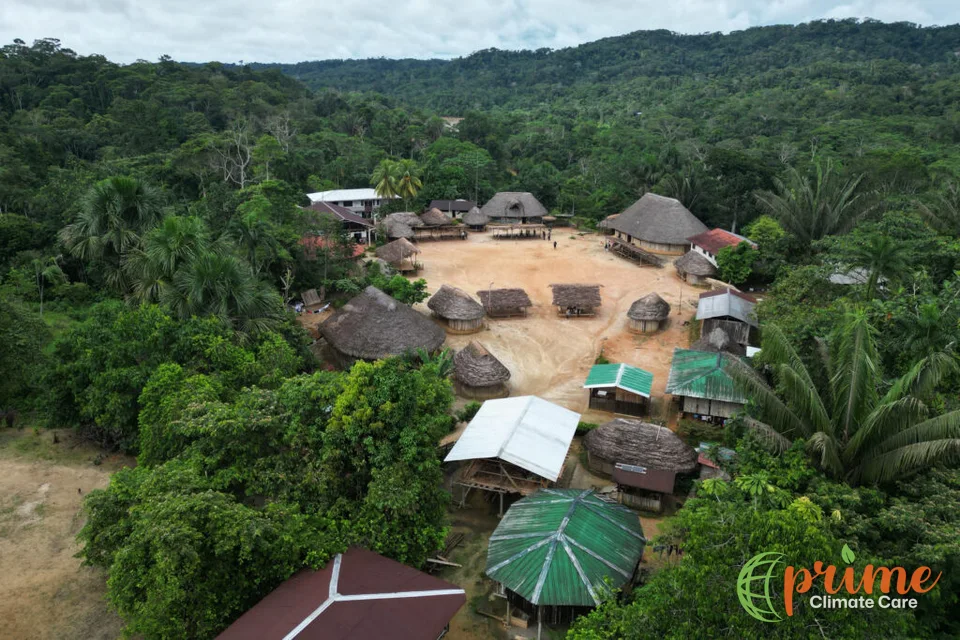
Ecuador's Sarayaku people share lessons from their oil fight with Brazilian Indigenous leaders
Indigenous leaders facing oil exploration in Brazil visited Sarayaku in Ecuador, a Kichwa community that forced out an oil company and won a landmark 2012 human rights ruling.
Summarised by Prime’s AI news desk from Inside Climate News (opens in a new tab), and published automatically without prior human review. Please report any errors through our contact page.
Indigenous leaders from Brazil who are challenging oil exploration near their lands have travelled to the Kichwa community of Sarayaku in Ecuador's Amazon to learn how it forced an oil company off its territory, Inside Climate News reported on 1 November 2026. Guisel Marworno and Wagner Karipuna were part of a delegation of about two dozen people organised by the Global Alliance for the Rights of Nature.
A delegation seeking lessons
According to the report, Brazil's state-owned oil company Petrobras has begun exploring for offshore oil near the coastal territories of the Galibi Marworno and Karipuna peoples. These lands include Amazon rainforest, large mangrove belts and mudflats. The prospect of an oil boom is already changing the nearby city of Oiapoque, where new settlers are adding pressure on Indigenous lands.
In 2025, the two peoples, together with the Palikur-Arukwayene and Galibi Kali'na, filed a lawsuit in Brazil challenging the government's drilling plans. The report says governments across the Amazon basin have placed oil and gas concessions over some 31 million hectares of Indigenous lands, an area roughly the size of Poland.
The delegation also included lawyers and two winners of the Goldman Prize, a major environmental award: Colombian anti-fracking activist Yuvelis Morales Blanco and Mari Luz Cañaquiri Murayari, whose Kukama community in Peru won a rights-of-nature case for the Marañón River in 2024. The rights of nature is the idea that ecosystems are living beings with legal rights, such as the right to exist and flourish. Natalia Greene, the alliance's global director, regards Sarayaku as the heart of that movement.
From Oil Block 23 to a landmark ruling
Sarayaku leader Patricia Gualinga, 57, told the visitors that the community received legal title to its territory in 1992. Four years later, the government, which owns the rights beneath the ground, allowed an Argentine oil company to drill there, and the land became Oil Block 23 on official maps.
In 2002 the company entered with a military escort. The community blocked operations, ran an international campaign and faced a violent crackdown; court documents allege that four leaders were tortured. The company left in 2003 but, the report says, tonnes of explosives were left buried across the territory. Ecuador's environment and foreign affairs ministries and its attorney general's office did not respond to requests for comment.
"Companies never lose," Patricia Gualinga said.
In 2012 the Inter-American Court of Human Rights ruled that Ecuador had violated the community's rights by allowing exploration without consultation, and ordered reparations and removal of the explosives. The ruling set a precedent for Indigenous peoples' right to free, prior and informed consultation, meaning they must be properly consulted before projects affecting their lands go ahead. Ministers have apologised, but the explosives remain. In August, the community asked the court, in the still-open case, to include recognition of its forest as a living being with rights.
The idea of a living forest
José Gualinga, 62, Patricia's brother, proposed the Kawsak Sacha, or "Living Forest", declaration in 2004 after 18 years of studying ancestral teachings. It describes the territory as a living, intelligent forest rather than a store of resources. The report says the idea helped inspire Ecuador to recognise nature's rights in its 2008 constitution. In 2021, Ecuador's Constitutional Court ruled that mining permits violated the rights of the Los Cedros cloud forest.
José Gualinga said Kawsak Sacha goes further than laws that give rights to single rivers or mountains, because it treats the whole territory as one living system. The community monitors the plants and animals it harvests and imposes moratoriums on hunting, fishing and harvesting when populations fall.
Why it matters for Tanzania
The Sarayaku case centres on a question many resource-rich countries face: how communities are consulted before large extractive projects reach their land, and who bears the costs left behind. Tanzania, with its forests, coastal mangroves and many rural households that depend directly on land and water, has a clear interest in how such questions are settled.
The story also shows how legal ideas such as rights of nature and consultation rights are spreading across borders through courts and community networks. These ideas increasingly feature in international climate and biodiversity discussions in which Tanzania takes part.
Source: Inside Climate News
Topicsindigenous rights · oil and gas · rights of nature · amazon · forests

Comments
No comments yet. Start the conversation.
Leave a comment
Comments are read by our team before they appear. Your email address is never published.