

UN report finds adaptation finance for poorer countries has stalled since 2022
A UNEP report says rich-country funding to help developing nations adapt to climate impacts reached at most $32bn in 2024, far below the $305bn a year needed by 2035.
Money from wealthy nations to help developing countries adapt to the climate crisis has been flat or falling since 2022, according to a new report from the United Nations Environment Programme (UNEP), published by The Guardian on 4 November 2026. The report says adaptation finance falls far short of what poorer countries need and lags behind the pledges rich nations made in 2021.
Adaptation means measures that help communities live with climate impacts. Examples include stronger infrastructure, early warning systems, flood protection and irrigation that can withstand drought.
A widening funding gap
UNEP estimates that the world's 155 developing countries will need $305bn a year by 2035 to adapt to heatwaves, fires, floods, storms, droughts and rising seas. The report links these worsening hazards to decades of fossil fuel burning, mostly in wealthy nations of the global north.
Yet finance from rich to poor countries reached at most $32bn in 2024, the latest year with data. That was only about $1bn more than the year before and below the 2022 peak. The report says this is partly because many European governments are putting more of their budgets into defence.
The figure is well behind the goal of $40bn by 2025, although the report expects multilateral development banks to have closed part of that gap in 2025. At the COP30 talks in Belém, Brazil, in 2025, wealthy nations agreed to triple adaptation finance by 2035, to between $85bn and $120bn. According to the report, even that would meet only 20 to 29 per cent of needs.
Poorest countries hit hardest
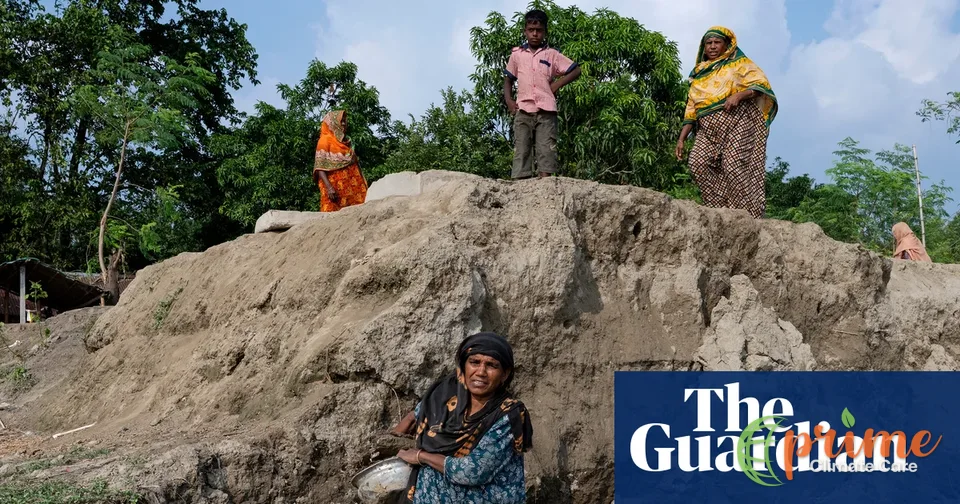
The report says least developed countries (LDCs) and small island states suffer disproportionately and are least able to pay for upgrades such as sea barriers and firefighting equipment. UNEP estimates they need $40bn to $50bn a year, about 3 to 4 per cent of their gross domestic product. That is double the relative burden on upper-middle-income developing countries. Even so, LDCs received 16 per cent less adaptation support in 2024 than in 2022.
Between 2020 and 2025, low- and middle-income countries accounted for 99 per cent of the 765 million people affected by floods and landslides. The report adds that some of the worst harm goes uncounted, because developing nations are less likely to have systems to track heat-related deaths or damage to ecosystems.
A recently created fund for loss and damage is already overwhelmed, the report says. In its first round, 119 developing countries asked for a total of $2.8bn, far more than its initial funding of $342m.
Inger Andersen, UNEP's executive director, said a global temperature overshoot of 1.5C above preindustrial levels is now locked in. "For the countries that contributed the least yet suffer the most, this is an unavoidable reality," she said, urging that commitments be honoured in full. "Delays not only increase long-term costs, they also strain our near-term capacity to cope as our systems reach their limits."
Pressure ahead of COP31
Climate justice groups say adaptation finance is the most urgent issue for the COP31 UN climate summit in Antalya, Turkey, from 9 to 20 November. Beyond larger and faster flows, they want grants or low-cost (concessional) loans rather than high-interest loans. They argue such loans are hard to repay for sea walls, heat shelters and other projects that earn no direct income. The UNEP report supports this point, noting that debt and equity costs can more than double adaptation project budgets.
Andersen also argued that climate action and national security cannot be separated, saying that failing to invest in adaptation and mitigation leaves nations more exposed to risk.
Why it matters for Tanzania
The report does not mention Tanzania directly. However, as a developing country exposed to droughts and floods, with many farmers relying on rain-fed agriculture and coastal communities facing rising seas, Tanzania is among the countries whose needs this funding is meant to address. Stalled finance could slow investment in the kinds of measures the report lists, such as early warnings, flood defences and drought-resilient irrigation.
The debate over grants versus loans also matters for countries managing public debt. As negotiators gather for COP31, the size and terms of adaptation funding are likely to be central concerns for Tanzania and other African delegations.
Source: The Guardian
Topicsclimate finance · adaptation · unep · cop31 · loss and damage
Comments
No comments yet. Start the conversation.
Leave a comment
Comments are read by our team before they appear. Your email address is never published.