

Researchers warn methane accounting method could hide livestock emissions ahead of UN summit in Turkey
Two new studies say the GWP method of counting methane could let big livestock exporters report large cuts while actual emissions barely fall, and that beef's climate impact is underestimated.
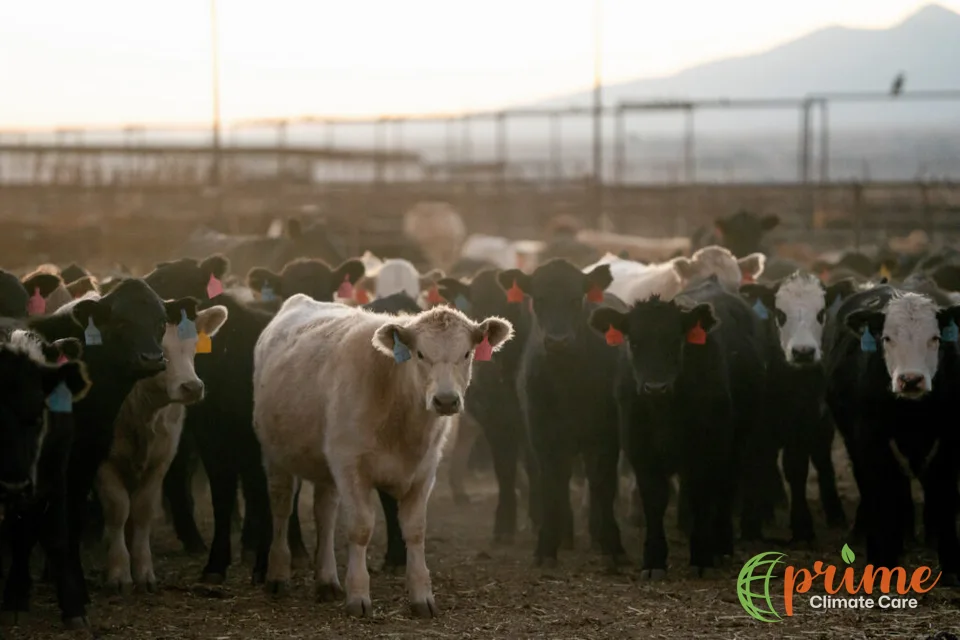
Two new studies say the way methane from livestock is measured can make the climate impact of beef look far smaller than it really is. An analysis commissioned by Greenpeace International, published on 29 October, and a university study released on 11 October both question common accounting methods as negotiators prepare for the United Nations climate summit in Turkey.
A dispute over how methane is counted
Methane is a greenhouse gas that traps far more heat than carbon dioxide over a short period, about 80 times more over 20 years, but it breaks down in the atmosphere after roughly 12 years. Livestock are its main human-caused source. Cutting methane quickly is therefore seen as one of the fastest ways to slow warming.
Under the UN Framework Convention on Climate Change, gases are compared using "global warming potential" (GWP), which converts them into carbon dioxide equivalents over 20 or 100 years. About a decade ago, scientists at the University of Oxford developed an alternative called GWP*, which assumes that stable methane emissions add little extra warming because the gas breaks down relatively quickly.
Climate scientists say the science behind GWP* is sound, but they worry it is being used to justify weaker action on livestock. Earlier this year, 42 prominent climate scientists warned that the method lets countries or industries set "no additional warming" targets. New Zealand, where livestock account for nearly half of national emissions, became the first country to set such a target last year. The livestock industry backs a "split gas approach" based on GWP*. Industry groups did not respond to requests for comment from Inside Climate News.
A gap larger than a country's emissions
The Greenpeace report, based on modelling by the consultancy Cerulogy, examined the 10 largest livestock-exporting countries that have joined the Global Methane Pledge, which aims to cut methane emissions by 30 per cent by 2030. They include Brazil and the United States.
It found these countries could reduce actual methane by only 0.6 per cent in 2030 compared with 2020, yet report a 30 per cent cut using GWP*. The report puts the gap between GWP* figures and the standard 100-year measure at 1,538 million tonnes of carbon dioxide equivalent in a single year, more than Indonesia's total emissions in 2025.
"Methane is the climate emergency brake," said Sophie Nodzenski, a Greenpeace campaigner, adding that action now could show results within 15 years.
Beef stands out over a shorter time frame
In a separate study in the journal Frontiers in Sustainable Food Systems, researchers from the University of California, Los Angeles, working with Jennifer Molidor of the Center for Biological Diversity, compared 222 food items across 16 categories. Beef-based meals produced about 3,500 grams of carbon dioxide equivalent using the 100-year measure, but more than 7,000 grams using the 20-year measure. Most other foods changed little.
"Over 100 years you're basically averaging out the really high potency of methane," said Jennifer Jay, one of the authors. The researchers say policymakers and negotiators should rely on more than one metric.
Why it matters for Tanzania
Livestock keeping supports many Tanzanian communities, and the way methane from animals is counted shapes how countries report progress under the Paris Agreement. The debate shows that the choice of accounting method can change which countries appear to be cutting emissions, and by how much.
For a country exposed to droughts and floods, the pace of global warming matters directly. Tanzania takes part in international climate talks, where rules on measuring and reporting emissions, including from agriculture, are negotiated and shape what is expected of every country.
Source: Inside Climate News
Topicsmethane · livestock · emissions accounting · cop31 · agriculture

Comments
No comments yet. Start the conversation.
Leave a comment
Comments are read by our team before they appear. Your email address is never published.